+65 83551210
You’ve paid a developer to build your game. The code is finished. The game is yours - or at least, that’s what you assume.
Then the developer tells you they own the source code.
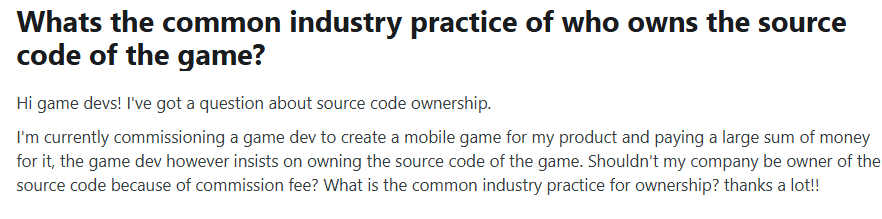
This is where things get complicated. In the game industry, paying for development doesn’t automatically mean your company owns the copyright. Ownership depends on the contract, how the work was created, and whether the rights were properly transferred.
For startups and game studios commercializing in the U.S., getting this wrong can create serious problems later - especially when you raise investment, sell the game, hire another developer, or discover someone has copied your code.
After helping tech companies protect and commercialize their intellectual property for more than 10 years, we’ve seen how easily source code ownership gets overlooked until it becomes a problem.
In this guide, our experts at Global Link Asia Consulting (“GLAC”) will break down what actually matters:
- Which assets to register first when your budget is tight;
- Why a “work made for hire” line with a freelance coder does not hand you the rights you expect;
- How to copyright your source code the right way;
- Five ways to submit your source code and still protect your trade secrets.
Let’s get into it.
1. What does it mean to register your copyright in the U.S.?
Registering copyright means filing with the U.S. Copyright Office to put your authorship on record. You can register software, video games, apps, images, video, music, documents, other creative work, and your source code.
Here is the part people get wrong. Registration does not create your copyright. The U.S. Copyright Act gives you the rights the moment you create the work in a tangible form, your source code, a design file, an image, a video, an audio file, or text. You own it from that second.
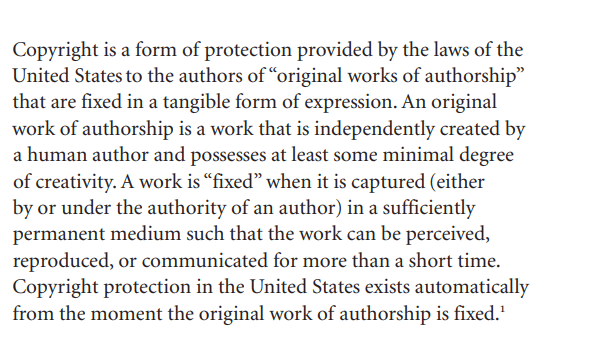
Copyright Protection in the U.S.
So what does registration add? Leverage.
When someone copies your work, uses it without permission, or challenges you in the U.S., your Certificate of Registration becomes your core proof of ownership. It gives you stronger protection in court and access to legal remedies that would otherwise be unavailable.
2. Three reasons you should register your copyright in the U.S.
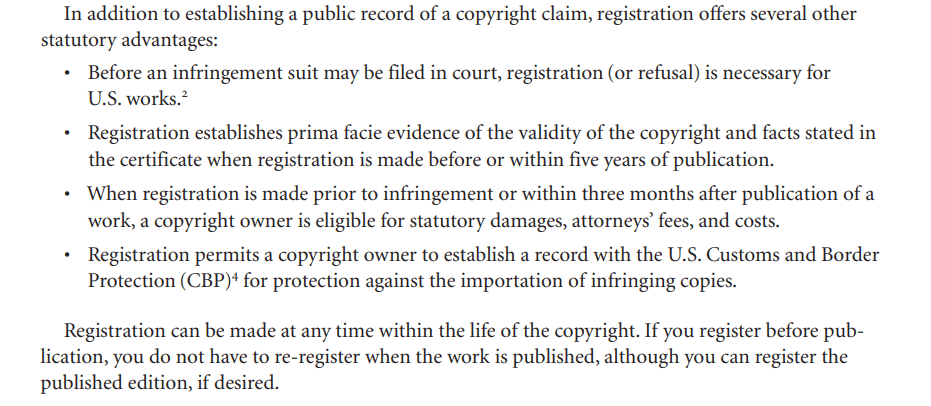
Registration gives you rights that automatic copyright never does: statutory damages of up to USD 150,000 per infringed work, the right to sue in U.S. federal court, and a certificate that carries real weight at the negotiating table.
Statutory damages are amounts the law fixes in advance, with a floor and a ceiling. You do not have to prove how much you actually lost.
They run from USD 750 to USD 30,000 per work. A court can push that to USD 150,000 for willful infringement (U.S. Copyright Act).
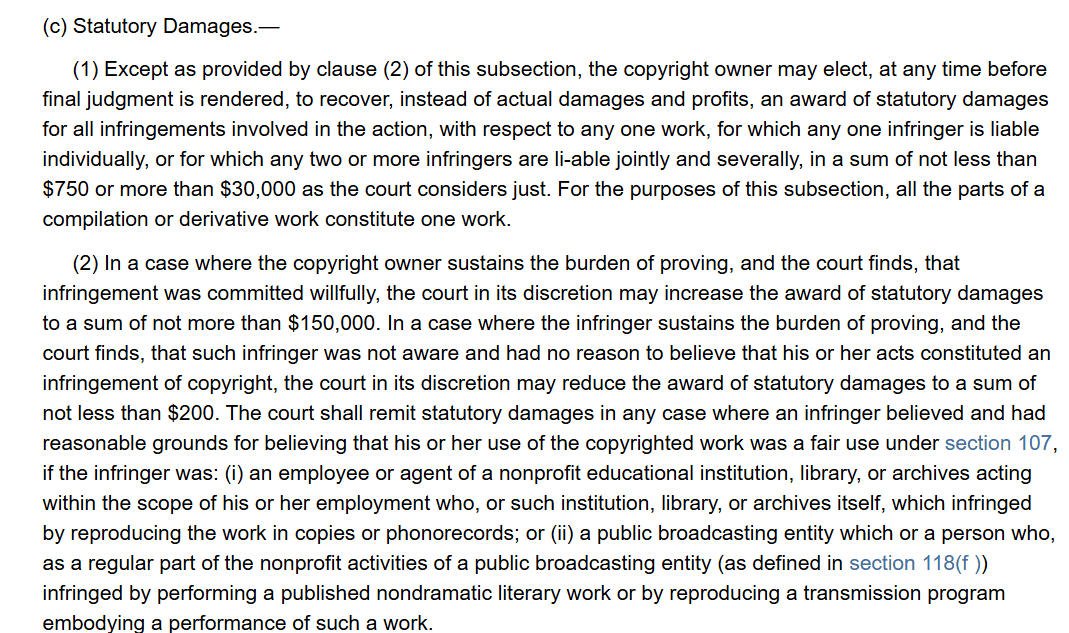
Copyright Infringement Damages in the U.S.
The timing is strict. You register before the copying starts, or you register within three months of first publication.
Benefits of Copyright Registration in the U.S.
Miss both windows and you fall back on actual damages plus the infringer’s profits. For a digital product, proving lost revenue is hard, so a lot of these cases stop at a warning letter.
You cannot file an infringement suit until the U.S. Copyright Office approves or refuses your application. (One narrow exception covers works that are not U.S. works.)
Filing does not mean you are ready to sue. A full application takes 4.1 months on average to process (U.S. Copyright Office).
Start the paperwork only after you catch the copying, and you pile months of waiting on top of the damage. Register early and you slash your response time when trouble hits.
Prima facie evidence is evidence a court accepts at face value, until the other side proves otherwise. That shifts the burden onto the party you accuse.
Your registration certificate creates prima facie evidence of your copyright and of the facts printed on it. You lock that in by registering within five years of publication.
Most disputes never reach a courtroom. People settle them with a phone call, a cease-and-desist letter, or a takedown on the distribution platform. In those moments, an official registration number speaks far louder than your word.
From what we see with clients, the copying that hits hardest in the U.S. looks like this:
- A near-identical game or app, a clone;
- Copied source code;
- Copied artwork, characters, or game assets;
- Video and images lifted without permission;
- Your work used commercially with no license.
3. Which parts of your software, game, or app can you register?
Your product (App/Game/Software) is not one work. It splits into six asset groups you can register:
- Source code;
- Artwork and game assets;
- Screen displays;
- Audiovisual elements;
- Music and audio, and;
- Written materials.
You just need to remember some share one application. Others need their own.
To help you see which pieces deserve protection first, our legal experts mapped the six groups below:
| Asset group | What it covers | Note for your studio |
| Source code | Your source code for software, mobile apps, and games | Send excerpts, not your whole codebase |
| Artwork and game assets | Artwork, graphics, icons, characters, backgrounds, game assets | Pay attention to this since this is the most-copied group in games |
| Screen displays | Your on-screen displays and UI artwork | Mention only the parts that qualify |
| Audiovisual works | Game trailers, animation, video | Should include your marketing assets |
| Music and audio | Background music, sound recordings, other audio | Clear the rights with your composer or licensor |
| Written materials | Manuals, text, storyline, script, in-game narrative | Should cover story-driven games too |
A finished game is a bundle of different works. Whether you register them together or apart comes down to two things: who owns each piece, and whether the pieces went public together.
Source code sits in the software group. Artwork sits in visual arts. The trailer sits in audiovisual works. The soundtrack sits in music. The storyline sits in text.
For a video game, you can combine the on-screen audiovisual material and the program that runs the game in one application. Two conditions: you own both, and you published them together as one unit.
Own both the screen displays and the program? Registering the program already covers the displays, even when your application never mentions them.
So you will not always file six applications. But freelancer-owned artwork, or a marketing trailer you released before launch, needs its own filing.
Weigh these before you file:
- The asset that earns you the most, and would sting the most to lose;
- The asset your competitors and cloners are eyeing in the U.S.;
- The asset with clean ownership and ready paperwork, versus the one still tangled in a freelancer, licensor, or stock contract.
That last one matters most. A freelancer drew your artwork, or your soundtrack came from a third-party library? Confirm you own it before you file.
4. Which parts can copyright never protect?
Copyright in the U.S. does not cover your game name, app name, brand name, slogans, or short phrases. It also skips ideas, game concepts, rules of play, mechanics, systems, methods, and features. Those belong to trademark or patent.
Here is what we see most: the trouble rarely comes from someone lifting your exact source code. It comes from a rival who builds a lookalike, rewrites the code, redraws the art, and slaps on a new name.
In this scenario, now the question changes. It is no longer whether your product enjoys protection. It is whether the piece they took sits inside copyright at all.
Knowing where these lines fall keeps you from grabbing the wrong tool and chasing a case copyright was never going to win. Thomas Trần, Head of Legal on our team, laid out the differences:
| Group | What copyright skips | What it means for you | The right tool |
| Names and branding | Titles, game names, app names, studio names, slogans, taglines, short phrases | Someone ships a product on your exact game name, and copyright cannot stop them | Trademark, filed on its own |
| Ideas and mechanics | Ideas, game concepts, rules of play, mechanics, systems, methods, features, algorithms | A rival copies the gameplay but rewrites the code, redraws the art, and renames it, and does not automatically infringe | Patent when it qualifies, plus trade-secret cover for the mechanics |
| Internal know-how (for comparison) | Unpublished algorithms, internal processes | Nothing to file in a public application | NDAs and confidentiality clauses with your staff and partners |
A quick example. Matching three blocks of the same colourto score points is a game mechanic, and it lives outside copyright. But the characters, artwork, soundtrack, and source code you built to bring that mechanic to life sit firmly inside it.
So next to your copyright application, we help you file your U.S. trademark and patent applications too, based on what you need to protect. Want the full comparison? See our guide on trademark versus copyright registration in the U.S.
A note from our experts
The line between an idea and its expression trips up a lot of studios. You cannot own a style of gameplay. You can absolutely own the way you express it, through your characters, your images, your audio, and your code. So the smart play pairs copyright with trademark, and adds a patent when you hold a real technical solution. A studio going global usually runs two layers side by side, and one rarely does the job on its own.
— Thomas Trần, Head of Legal, Global Link Asia Consulting
5. How do you register your copyright in the U.S.?
Five steps take you from idea to certificate: size up the work and plan the filing, prepare the application and check ownership, file online, track the review, and collect your Certificate of Registration.
So you can see the whole path before the detail, our advisory team and Thomas Trần, Head of Legal, mapped it out:
| Step | What you do |
| Step 1 | Size up the work and choose to combine or split by asset type |
| Step 2 | Prepare the application and check ownership, clearing any missing contracts |
| Step 3 | File online, pay the fees, and pick up your tracking number |
| Step 4 | Track the review and answer the examiner’s questions |
| Step 5 | Collect your Certificate of Registration and put your rights to work |
Step 1: Size up the work and plan the filing
First, pin down which works qualify and pick the right form for each. Every asset registers a little differently, so this step shapes everything after it.
Your lawyer weighs three things: the type of work (software, game, app, images, video, music, documents); the protection each part can earn; and whether you file one application or several, based on ownership and timing.
Take a video game. It can hold source code, characters, artwork, the interface, audio, and video all at once, and each one may call for its own strategy.
Ten years of this work taught us one thing: the combine-or-split call drives most of your cost and most of your protection. Our specialists team up with U.S. attorneys to grade each asset and recommend the route that fits your goals.
Step 2 Prepare the application and check ownership
Once you know what you are registering, you gather what the U.S. Copyright Office asks for. A typical application carries:
- Your details as the copyright owner;
- The author’s details;
- The title of the work;
- The year you finished it and whether you have published it;
- A short description of the work;
- A deposit copy, a source-code excerpt, images, video, a design file, or related documents.
You also check ownership so nothing sits in dispute, and you flag any open-source code, third-party assets, or AI-generated content, as the rules now require.
We review ownership for you, make sure the file is complete, and walk you through the documents the U.S. Copyright Office wants.
Step 3: File the application
With the file ready, your lawyer prepares the application, files it online with the U.S. Copyright Office, and pays the fee. You get a tracking number the moment they receive it.
We finalize the file with you, double-check every detail before submission, and follow the whole process, so errors stay out and your filing stays inside the Copyright Office rules.
Step 4: Track the review and answer any questions
Once your file is in, the U.S. Copyright Office reviews it. Sometimes the examiner asks for more documents or an explanation about the work, the ownership, or the content.
Online applications usually take four to six months to process, depending on the type of work and the shape of your file.
All the way through, we watch the progress and work with the U.S. attorney to answer the Copyright Office fast, prepping any extra documents or explanations that keep your timeline short.
Step 5: Collect your Certificate of Registration
The U.S. Copyright Office issues your Certificate of Registration once they approve the application.
That certificate proves your ownership and powers your enforcement in the U.S. It also lifts the value of your IP when you raise money, transfer it, licence it, or sign a partner.
After approval, we hand you the certificate and show you how to put your IP to work. Run into a dispute or an infringement in the U.S.? We connect you with attorneys to enforce your rights.
6. What do you prepare to register a game or software copyright?
Your application pulls together eight pieces: your owner details, the title, the author details and work-made-for-hire status, the year and publication, a description of what you register, the deposit copy, a note on any third-party content, and confirmation that you own the rights.
Get these ready up front and you speed the whole thing up. A thin file is exactly what pushes an examiner to write back and ask for more, which drags out your timeline.
6.1. The documents to prepare
The checklist below follows our U.S. copyright registration service:
- Your legal name and address as the copyright owner;
- The title of the work;
- The author or authors, plus whether the work counts as work made for hire;
- The year you finished it, and publication details once you publish;
- A description of the materials you register;
- The deposit copy, a source-code excerpt, artwork file, screenshot, audio file, video file, or other required document;
- A note on any third-party content, open-source code, licensed assets, stock assets, or AI-generated content;
- Confirmation that you own the rights you claim.
Two of the eight trip people up most, the note on third-party content and the ownership confirmation, especially when your product carries freelancer artwork, marketplace assets, open-source libraries, or AI content. Ownership unclear? Sort it out before you file, rather than letting the examiner catch the gap.
6.2. What to do when ownership is not clear?
Settle ownership before you file. The U.S. Copyright Office says a copyright transfer generally has to sit in writing, signed by the rights owner or an authorised agent. A verbal deal or a few texts with a freelancer will not prove you own the work.
To help you spot your own situation and fix it before filing, our legal experts summed up the common cases:
| Your situation | The issue it raises | What you do before filing |
| Code and artwork your full-time staff make on the job | Usually work made for hire, but you still need the paper trail | Keep the employment contract and job description on hand |
| Artwork or music from a freelancer | The rights can stay with the freelancer without a signed deal | Get a written, signed copyright assignment |
| Assets you bought from a marketplace or stock library | You hold a licence to use them, not the copyright | Read the licence terms, and drop these from your registration where needed |
| Products that lean on open-source libraries | Each licence sets its own terms | List every library and licence you use |
| Content with an AI hand in it | You take on a disclosure duty, and it narrows your protection | Mark clearly which parts a human made |
7. The two mistakes we see most in studio applications
Two slip-ups come up again and again: naming the wrong author on a work-made-for-hire work, and skipping the check on where your third-party assets came from. Both land you an examiner’s request for more.
7.1. Naming the wrong author on a work-made-for-hire work
Work made for hire flips the usual rule: the party who hires, not the person who creates, counts as the author and owner. The U.S. Copyright Office recognises two cases:
- Work your employee makes inside their regular job;
- Work you specially commission under a written deal that spells out “work made for hire,” where the work also lands in one of nine categories the law lists.
Here is where many studios trip. The nine categories are a compilation, a contribution to a collective work, a part of a motion picture or other audiovisual work, a translation, a supplementary work, an instructional text, a test, answer material for a test, and an atlas.
A computer program is not on that list. So for code a freelancer writes, calling it work made for hire in the contract does not move the rights to you.
You need a written, signed copyright assignment instead. Artwork used inside the game’s audiovisual work can play out differently, so weigh that one on its own.
7.2. Skipping the check on where your assets came from
A game or app rarely consists entirely of original work. It may include licensed music, marketplace assets, open-source libraries, stock content, or AI-assisted materials.
Review and document all of these before filing, rather than discovering an ownership issue when the examiner asks about it.
For foreign studios registering copyright in the U.S., the challenge is proving ownership. Many products include artwork from freelancers, licensed music, or marketplace assets without clear contracts or documentation showing who owns the rights.
8. Does submitting source code mean showing all of it?
No. The U.S. Copyright Office only wants a slice of your source code that identifies the work, usually your first 25 and last 25 pages. Got trade secrets in there? You pick one of five ways to redact.
This is the worry we hear most from game studios and software companies. Many picture themselves handing an entire codebase to a foreign agency and watching it go public. That is not how it works.
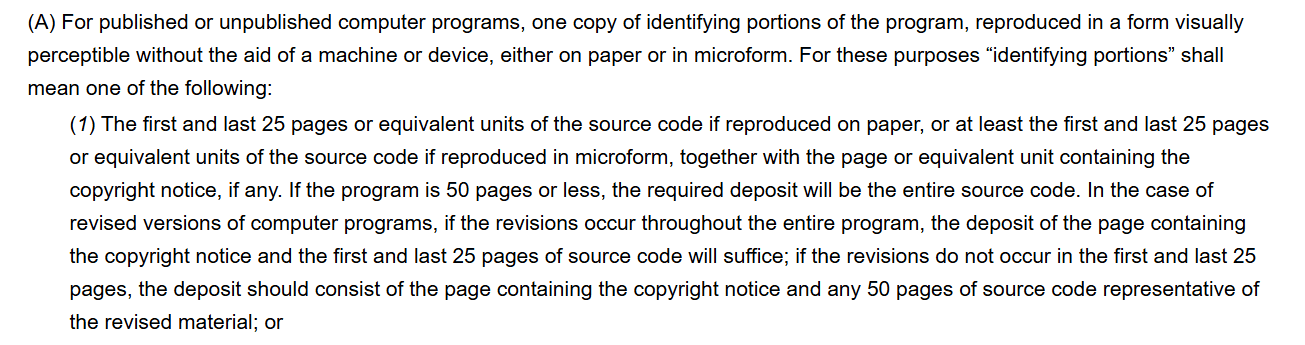
Circular 61 of the U.S. Copyright Office keeps this simple: no trade secrets, and you submit one copy of the first 25 and last 25 pages of the version you register. Three special cases sit alongside it:
- No clear beginning, middle, and end? Submit 50 pages that fairly represent your first and last stretches;
- Whole program under 50 pages? Submit all of it and tell the office you are sending the lot;
- Every option keeps the page that carries your copyright notice, when you have one.
Source Code Deposit Requirements for Software Copyright Registration
Here you tell the office in writing that your code carries trade secrets, then pick one of five options.
To help you shield the sensitive code and still clear the deposit standard, Thomas Trần, Head of Legal on our team, laid out the five options:
| Option | How you submit | Best when |
| 1 | Your first 10 and last 10 pages, nothing redacted | Your start and end hold no core algorithm, the simplest route |
| 2 | Your first 25 and last 25 pages, redacting the trade-secret parts, under 50% of the deposit blacked out | Trade secrets scattered through your start and end |
| 3 | Your first 25 and last 25 pages of object code, plus 10-plus straight pages of source code with nothing redacted | You want to expose as little source code as possible |
| 4 | Your whole code when the program runs under 50 pages, redacting the trade-secret parts, under 50% blacked out | A small program, under 50 pages |
| 5 | 20 to 50 pages that fairly represent your start and end | Your source code has no clear start, middle, and end |
The Copyright Office runs this rule tight and turns away a deposit that misses the redaction standard. Two conditions stay non-negotiable: your redacted part stays smaller than your visible part, and your visible part still carries a real amount of protectable, creative content (U.S. Copyright Office, Circular 61, 2021). Black out nearly all your code and you walk away without a registration.
Prepare your deposit copy right and you do two things at once: you satisfy the U.S. Copyright Office, and you cut the odds of a follow-up request or a thinner scope of protection. Run through your code and documents with these in mind:
- Lock down the exact version you register before you pull the source code, because your deposit copy ties to that one version;
- Send source code you can read on the page. Object code works too, but the office then registers it under the Rule of Doubt, taking your word without granting a presumption of validity for that part;
- Comb the code you plan to send and pull out sensitive bits that earn no protection anyway, your keys, credentials, and internal endpoints;
- Remember that HTML does not register as a computer program. The Copyright Office reads HTML as a markup language, not source code, and registers it only as a literary work, and only when a human wrote it.
9. Five practical tips for game and app studios
The short version: do not lean on one application for everything, register early, own your AI disclosures, grab a separate trademark for your name and logo, and keep clean ownership records from day one.
So you catch the priorities before the detail, Thomas Trần, Head of Legal on our team, summed them up:
| Tip | The risk when you skip it |
| Do not lean on one application for your whole game or app | Your artwork and characters, the easiest to copy, slip outside your registration |
| Register early, before a dispute starts | You lose your shot at statutory damages and attorney’s fees |
| Own your AI disclosures | A third party can cancel or challenge your registration |
| Grab a separate trademark for your game name, app name, and logo | You hold no tool when someone uses your exact product name |
| Build an ownership record from day one | Delays, disputes, and a rough funding round |
This is the tip we lead with, and the misread we see most. Source code, artwork, audio, video, characters, written content, and screen displays can each need their own strategy.
Tight budget? Register in priority order, starting with the assets that earn you the most and get copied the fastest.
Your timing sets your remedies. The U.S. Copyright Office lets you reach for statutory damages and attorney’s fees in an infringement suit when you register before the copying starts, or within three months of first publication.
Our partner attorney tells you to file within two months of finishing the work. Read that as a safety cushion ahead of the three-month mark, a practical habit, not a legal deadline.
This one grows more important by the month, as artwork, concept art, audio, and even slices of source code lean on AI.
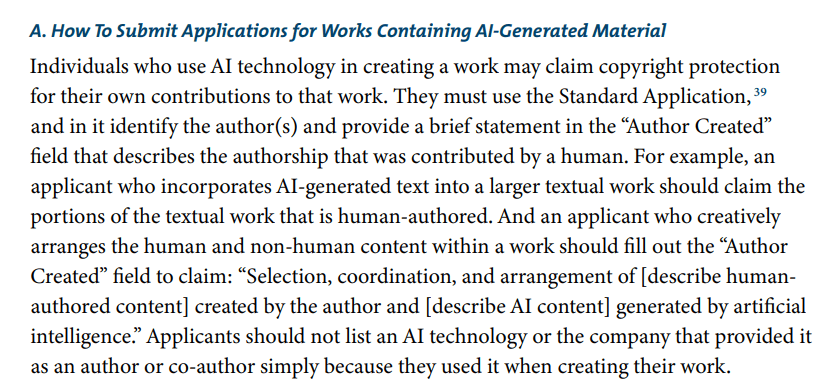
The U.S. Copyright Office guidance on AI-generated work sets a few rules:
- You disclose the AI-generated content and explain, in a line, what the human author added;
- You still claim protection for your own contribution, even when you used AI along the way;
Copyright Registration for AI-Generated Works
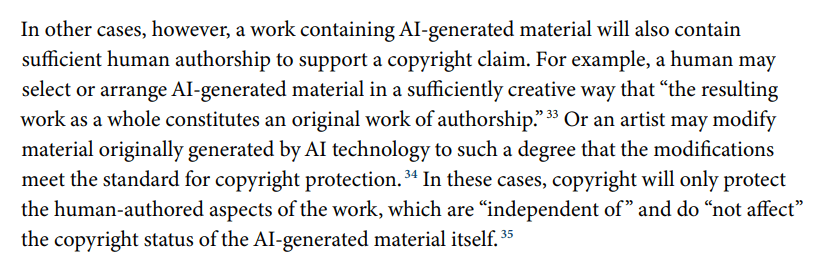
- The deciding factor is how much creative control a human held over the work’s expression, and the parts the AI shaped on its own do not count as human authorship;
- Your AI-touched work still registers in some cases, say when a human picks and arranges the content with real creativity, or reworks the AI output to a protectable standard, and protection then covers the human part.
Copyright Protection for Human-Created Content
So the honest way to say it is not “AI content cannot register.” The purely AI-made part earns no protection, while your human creative work still does. Disclose it straight and you keep that protection.
On the ground, keep a trail of your creative process, your prompts, your rough drafts, and the edits your artists and developers made. That trail is your proof of the human hand when you need it.
Your game name, app name, logo, studio name, and full brand identity live outside copyright. Cover them with a trademark, and plan it in step with your copyright, especially as you line up your U.S. launch.
From what we see, copyright disputes often trace back to one thing: you did not keep enough paper to prove you own the work. Keep these on file:
- Assignment agreements with your contractors and freelancers;
- Work-made-for-hire papers for your staff, with employment contracts and job descriptions;
- Licence agreements for anything you bought in;
- Compliance records for the open-source libraries you run;
- Your product’s version history.
Ship frequent updates? Your version history matters even more, because your deposit copy ties to one specific version.
10. How we help you register your copyright in the U.S.
Registering a U.S. copyright is more than completing an online application. For foreign companies, the real challenge is often knowing what to register, how to document ownership, and how to protect sensitive parts of the product.
At GLAC, we help you navigate the process from strategy to registration, working with our U.S. attorney partners when legal representation is required.
- Identify all copyrightable assets in your software, app, or game, including code, UI/UX, artwork, audio, and written content;
- Organize required materials and prepare the deposit in compliance with U.S. Copyright Office rules, including protection of confidential source code;
- Submit the application and ensure it is complete, accurate, and aligned with your ownership records;
- Monitor the application, respond to examiner requests, and support you through to final registration.
Beyond the copyright application, we help you file your U.S. trademark and patent applications, and we handle the steps you meet as you expand, including setting up your company in the U.S.
11. FAQs about US copyright registration for software, apps, and games
Yes. You can file with the U.S. Copyright Office for software, an app, or a game you own. The one thing you have to show is that you own the asset you claim, which weighs most when a freelancer or a third party made part of the product.
About 4.1 months on average, on official figures for 1 October 2025 to 31 March 2026 (The U.S. Copyright Office). File online with no back-and-forth and you average 3.6 months; draw correspondence and you average 5.0 months. Your registration takes effect from the day the office receives a complete application.
It depends on the author. A work an individual creates on or after 1 January 1978 runs for the author’s life plus 70 years. A work made for hire, or an anonymous or pseudonymous work, runs 95 years from publication or 120 years from creation, whichever ends first.
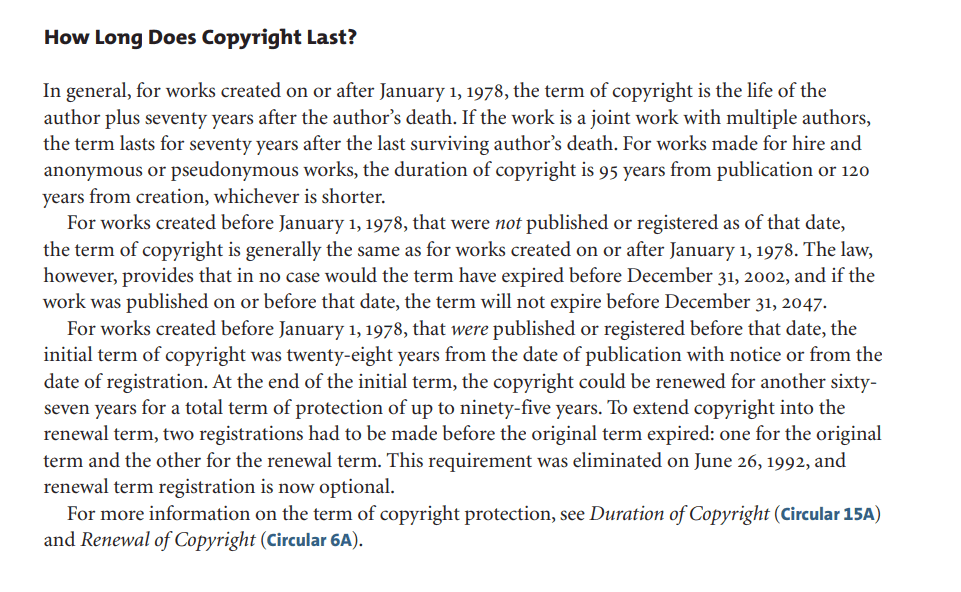
Copyright Protection Duration in the U.S.
No. The U.S. Copyright Office wants the identifying slice, usually your first 25 and last 25 pages of the version you register. Whole program under 50 pages? Send all of it and tell the office.
The freelancer, unless you get it in writing. For a computer program, calling it work made for hire in the contract does not cut it, because computer programs miss the nine categories the law lists. You need a written, signed assignment
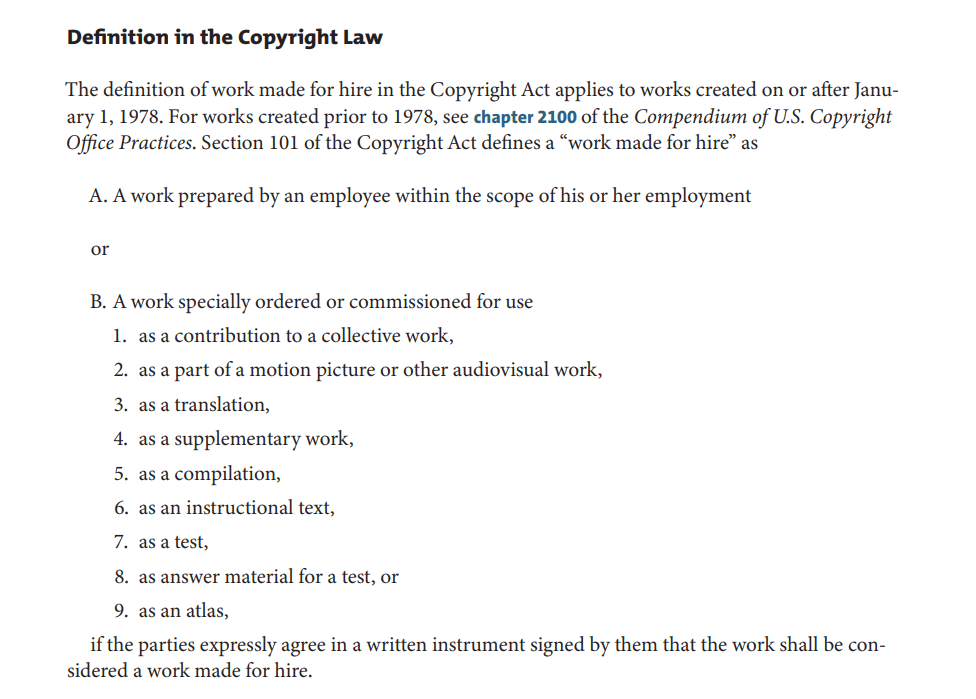
Definition of Work Made for Hire
Usually both, in parallel. Copyright guards your source code, artwork, and creative content; trademark guards your game name, app name, and logo. Which one leads depends on the real risk to each product and your release plan.
With over a decade of experience serving as a trusted partner to more than 750 business owners seeking professional development and breakthroughs in the international market, we are an expert strategic corporate service provider helping you incorporate and operate successfully in 10 different countries
Our areas of expertise include:
- Strategic Consulting and Company formation in over 10 different countries worldwide such as Singapore, Hong Kong, the U.S., Australia, Thailand, Malaysia, and offshore destinations like BVI, Belize, Seychelles, and more.
- Account opening for personal and corporate bank accounts, as well as setting up PayPal and Stripe gateqays in countries like Singapore, Hong Kong, and the U.S..
- Tax Consulting and Preparation for SFRS IFRS financial reports, corporate income tax returns, VAT/GST (Value Added Tax/Goods and Services Tax), and more.
- Opreation support:
- Registered adress;
- Foreign consular legalization;
- Trademark and patent protection registration in Singapore and the US;
- Employment Pass application in Singapore and Hong Kong;
- Website design, international SIM number provision;
- DUNS registration.
With over 10 years of experience and a team of experts with 5 to 25 years of experience (international standard certifications) as well as direct partnerships with institutions such as OCBC, UOB, DBS, PayPal, and Stripe, we are proud to offer professional, legal, transparent, sustainable services with no hidden costs.


Global Link Asia Consulting Pte. Ltd. is pleased to announce the publication of the above insightful and informative article on our official website, Global Link Asia Consulting on 21st August 2026. The copyright for this article is exclusively held by Global Link Asia Consulting Pte. Ltd. Any unauthorized reproduction or distribution of this content without our express written permission is strictly prohibited. We value the protection of our intellectual property and appreciate your cooperation in adhering to these guidelines. Thank you for your continued support of Global Link Asia Consulting Pte. Ltd.
The content in this article is provided by Global Link Asia Consulting for general informational purposes only. It is intended as a helpful reference and should not be considered legal, tax, accounting, banking, or other professional advice. Because laws and regulations can change, and every situation is different, we recommend that individuals and businesses seek independent professional advice before making any important decisions. Global Link Asia Consulting is not responsible for any loss or damage that may result from relying on the information in this article without obtaining appropriate professional advice.


 470 North Bridge Road, #05-12, Bugis Cube, Singapore (188735).
 Unit 308, 3/F, Chevalier House, 45-51 Chatham Road South, Tsim Sha Tsui, Hong Kong.
 90/14-17 Sathorn Thani Building 1, 8th Floor, North Sathorn Road, Silom, Bangrak, Bangkok 10500.
 12th, Felix Alley Building, 151/1-2 Nguyen Van Troi, Phu Nhuan District, Ho Chi Minh City, Vietnam.