+65 83551210
Do you need to open a business bank account? Your industry could make all the difference.
Some businesses are considered "high-risk" by banks, making account approval much more difficult.
In some cases, applications are delayed for weeks, since your business description is vague and requires banking internal check.
In others, they're rejected outright, even when the business is legitimate and fully compliant.
In this guide, our experts will help you discover:
- What banks consider a high-risk industry;
- Why these businesses face stricter due diligence;
- The most common industries banks tend to avoid;
- Practical strategies to improve your chances of opening a business bank account.
Let's get started.
1. What banks consider a high-risk industry?
A high-risk industry is a business sector that banks believe is more likely to expose them to financial, regulatory, or reputational risk.
These businesses aren't necessarily illegal or poorly managed.
In fact, many are profitable, well-established companies. They simply operate in industries where banks expect a higher chance of fraud, chargebacks, money laundering, sanctions exposure, or regulatory scrutiny.
You can think about the types of businesses banks tend to examine more closely. For example,
- Cryptocurrency companies;
- Online gambling platforms;
- Money service businesses (MSBs).
What do these businesses have in common? It's not their size or profitability. It's the level of risk they present from a bank's perspective. If not careful, banks may put themselves in danger for Anti Money Laundering (AML) breaches.
In July 2025, the Monetary Authority of Singapore (MAS) announced regulatory actions against nine financial institutions and several individuals following supervisory examinations connected to Singapore’s major August 2023 money laundering case.
The case highlights an important point: banks are not only responsible for identifying suspicious customers, but they can also face regulatory consequences when their AML/CFT controls fall short.
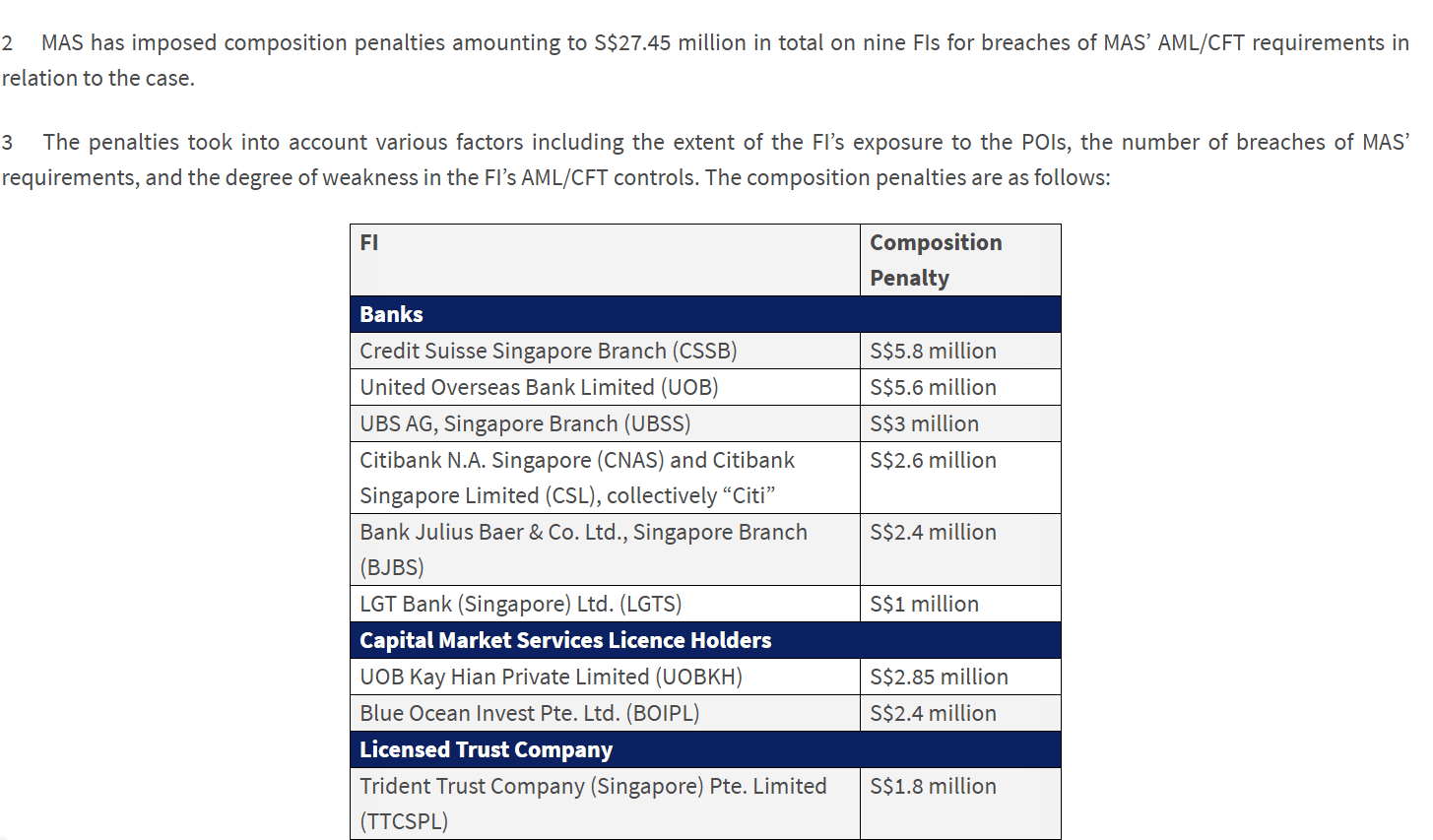
MAS takes regulatory actions against 9 financial institutions for AML-related breaches
2. Why these businesses face stricter due diligence?
2.1. The regulatory requirements
Banks are responsible for complying with strict anti-money laundering (AML), know-your-customer (KYC), and sanctions regulations. If a customer operates in an industry that carries greater compliance or financial risk, the bank may require enhanced due diligence, or decide not to provide banking services at all.
For example, Singapore’s Money Laundering (ML) National Risk Assessment (NRA) helps banks and regulators understand evolving risks by combining insights from law enforcement agencies, the Suspicious Transaction Reporting Office (STRO), supervisory authorities, and feedback from the private sector.
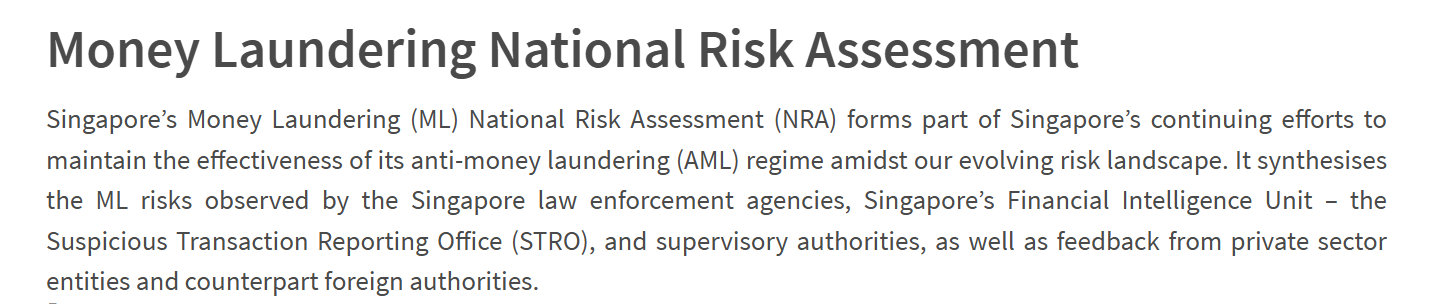
National Risk Assessment (NRA) forms part of Singapore’s continuing efforts to maintain the effectiveness of its anti-money laundering (AML) regime
On a global level, the Financial Action Task Force (FATF) sets international anti-money laundering and counter-terrorism financing standards and evaluates how effectively countries are addressing these risks. Jurisdictions such as Hong Kong, a FATF member since 1991, are fully committed to these requirements and are regularly assessed for compliance.
As a result, banks today take a far more structured and cautious approach when assessing industries that may carry higher financial or regulatory risk.

The Financial Action Task Force (FATF) leads global action to tackle money laundering
2.2. The vague nature of a business model
The nature of your business is one of the first factors banks evaluate during onboarding. Financial institutions are not only assessing whether your company is legitimate but also how much compliance risk your business presents throughout the life of the banking relationship.

Banker discussion about a customer case
One clear indicator bankers use to evaluate a business model is its transaction flow. Businesses with consistent, commercially justifiable transactions are generally easier for banks to assess than those with limited or irregular activity.
To illustrate this, our banking experts present the table below which compares two common business models: holding companies and companies with active commercial operations.
| Type of operations | Holding companies | Companies with active commercial operations. |
| Description | The primary purpose is to own shares, intellectual property, or other assets rather than conduct day-to-day trading. | Companies with clear, ongoing commercial operations, such as import-export businesses, software providers, manufacturers, or professional service firms |
| Level of scrutiny | Pure holding companies often face greater scrutiny. As a result, they may have little or no operating revenue, employees, or commercial transactions, making it more difficult for banks to assess the legitimacy and expected flow of funds. | These businesses generate predictable transaction patterns, issue invoices, maintain customer relationships, and can provide supporting documents such as contracts, shipping records, or purchase orders. This transparency allows banks to verify the source, purpose, and expected volume of incoming and outgoing funds. |
Without sufficient evidence of genuine business activity, banks can find it difficult to assess the expected flow of funds and may request additional documentation or decline the application altogether.
Certain industries receive even closer examination because regulators recognize them as having higher exposure to money laundering, fraud, sanctions violations, or terrorist financing risks.
These sectors commonly include:
- Virtual asset and cryptocurrency businesses
- Money service businesses (such as remittance providers and currency exchange operators)
- Online gaming and gambling operators
- Precious metals and precious stones trading
- Mining, oil, gas, and other natural resource extraction businesses
- Unregulated investment funds and asset management firms
For example, a licensed software company selling subscription services to businesses in the United States and Europe can typically demonstrate recurring revenue through customer contracts, invoices, and payment records.
In contrast, a newly incorporated cryptocurrency exchange without an established compliance program or regulatory license will struggle to satisfy a bank's AML requirements. Even if the business operates legally, the bank may determine that the ongoing compliance burden outweighs the commercial opportunity and decline the application.
3. 11 most common industries banks tend to avoid
A note from our experts
Not every business on this list will be rejected by banks. In reality, most financial institutions adopt a risk-based approach, evaluating each company based on its business model, regulatory compliance, transaction profile, and AML controls rather than its industry alone.
In fact, if your business model is approved by the relevant government authority and you obtain the required license, you can open a bank account with a government-approved bank.
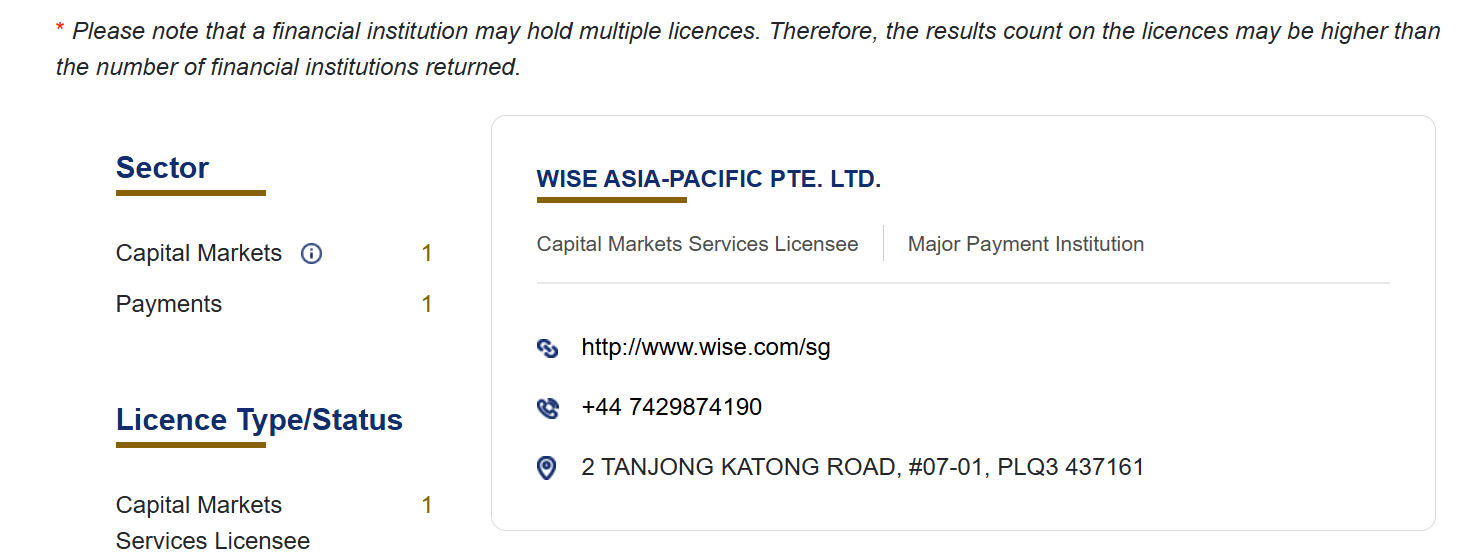
Wise Asia-Pacific Pte. Ltd. is licensed by the Monetary Authority of Singapore (MAS).
3.1. How do banks perform risk assessment?
Before placing a business in a higher-risk category, banks don't rely on the industry label alone, they follow a structured risk assessment approach. One of the frameworks banks use as a reference when developing their KYC/KYB programs. is the FATF Guidance for a risk-based approach for banking sector.
Under this framework, banks are expected to identify and assess money laundering and terrorist financing (ML/TF) risk across several dimensions:
- The nature, scale, and complexity of the customer's business;
- Its target markets and customer base, including how many existing customers are already flagged as high risk;
- The jurisdictions the business operates in or transacts with, especially those FATF identifies as having weaker AML/CFT controls;
- Findings from internal audits and regulatory reviews;
- The volume, size, and pattern of transactions relative to what's typical for that type of business.
Under this guideline, certain business models amplify these risk factors by design.
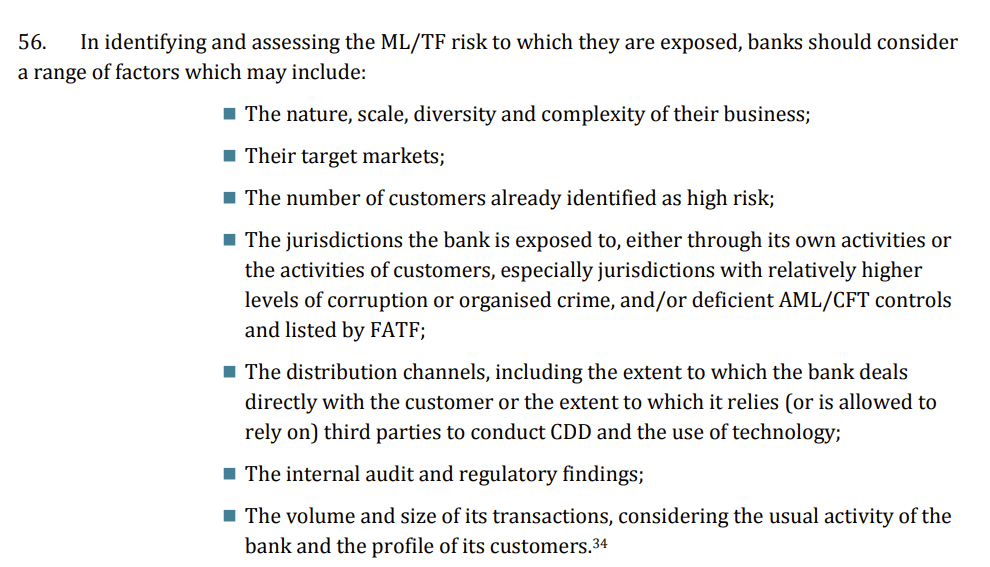
FATF guidance for a Risk-Based Approach
3.2. 11 most common high-risk industries
To help you better understand how banks assess different sectors, our experts have grouped some of the industries that commonly receive enhanced due diligence.
You can use this overview to identify where your business may fall, understand why banks consider these industries higher risk, and learn what steps you can take to strengthen your bank account application.
| Industry category | Examples | Why banks consider high risk | How to improve approval chances |
| Virtual Assets & Cryptocurrency | Crypto exchanges, OTC crypto brokers, crypto payment providers, crypto mining | Anonymous transactions, cross-border fund flows, sanctions and AML exposure | Obtain the relevant license (e.g., under Singapore's Payment Services Act if applicable), implement strong AML/KYC controls, document source of funds, and provide a detailed compliance framework. |
| Money Services & Payment Businesses | Remittance companies, money changers, payment institutions, digital wallets | Large transaction volumes, cross-border payments, money laundering and terrorist financing risks | Hold the required license, maintain robust AML procedures, explain transaction monitoring systems, and provide compliance documentation. |
| Investment & Fund Management | Hedge funds, private investment funds, family offices, unregulated asset managers | Complex ownership structures, high-value transactions, opaque source of wealth | Register or obtain the appropriate regulatory status where required, disclose beneficial owners, provide investment strategy, and demonstrate compliance controls. |
| Gaming & Gambling | Online betting platforms, casinos, gaming operators | High cash flow, fraud, AML, and cross-border payment risks | Operate only under recognized licenses, implement player verification and AML monitoring, and provide licensing documentation. |
| Natural Resources & Commodities | Mining, oil & gas, timber, commodity trading | High-value international transactions, sanctions exposure, corruption risk | Provide supply chain documentation, contracts, shipping records, ESG policies, and customer/supplier due diligence. |
| Precious Metals & Stones | Gold dealers, diamond traders, jewelry wholesalers | Easily transferable high-value assets, AML and sanctions concerns | Comply with Singapore's Precious Stones and Precious Metals (Prevention of Money Laundering and Terrorism Financing) regulations, maintain transaction records, and conduct customer due diligence. |
| Travel & Cross-Border Services | Travel agencies, tour operators | High refund volumes, chargebacks, multiple jurisdictions | Provide clear business records, supplier agreements, refund policies, and demonstrate financial stability. |
| High-Value Goods | Luxury watches, luxury vehicles, art dealers, auction houses | High-value transactions can be used to conceal illicit funds | Maintain customer verification procedures, sales documentation, and proof of asset provenance. |
| Highly Regulated Products | Firearms, pharmaceuticals, alcohol, tobacco, vaping | Strict licensing requirements, regulatory and reputational risks | Obtain all required licenses, demonstrate regulatory compliance, and maintain comprehensive compliance records. |
| Political & Sensitive Organizations | Political organizations, lobbying groups | Reputational risk, foreign influence, sanctions, political exposure | Provide transparent funding sources, governance documents, and comply with applicable reporting obligations. |
| Multi-Level Marketing (MLM) | Network marketing companies | Fraud concerns, high dispute rates, potential pyramid scheme characteristics | Demonstrate a legitimate compensation model, product-based revenue, and regulatory compliance. |
4. 2 practical strategies to improve your chances of opening a bank account
Opening a business bank account is no longer just about submitting the required documents. Banks assess whether they can understand, verify, and continuously monitor your business.
Want to increase your chance of success?
You can learn more in our detailed guides on opening a business bank account in Singapore and Hong Kong here:
Here is our motto that we always adhere by: The more transparent and well-prepared your company appears, the greater your chances of approval.
Below are 2 practical strategies our banking experts recommend to strengthen your application.
4.1. Strategy 1: Build a Professional Online Presence
A professional website is one of the easiest ways to demonstrate that your business is legitimate and operational.
Today, relationship managers often review a company's digital footprint before or during the onboarding process. If your business has little or no online presence, it becomes much harder for the bank to verify your operations, products, customers, and commercial activities.
In fact, if you do not have a verifiable business presence online, as well as a verifiable business address (For example, your business do not have a verifiable Google Business Profile) and identifiable contact person, banks are required to conduct a more thorough internal KYC review and may also cross-check information with other banks in your country.
This additional due diligence reduces your chances of successful onboarding, as it requires significant time, resources, and effort, and the outcome is not always positive, with a relatively high risk of failure.
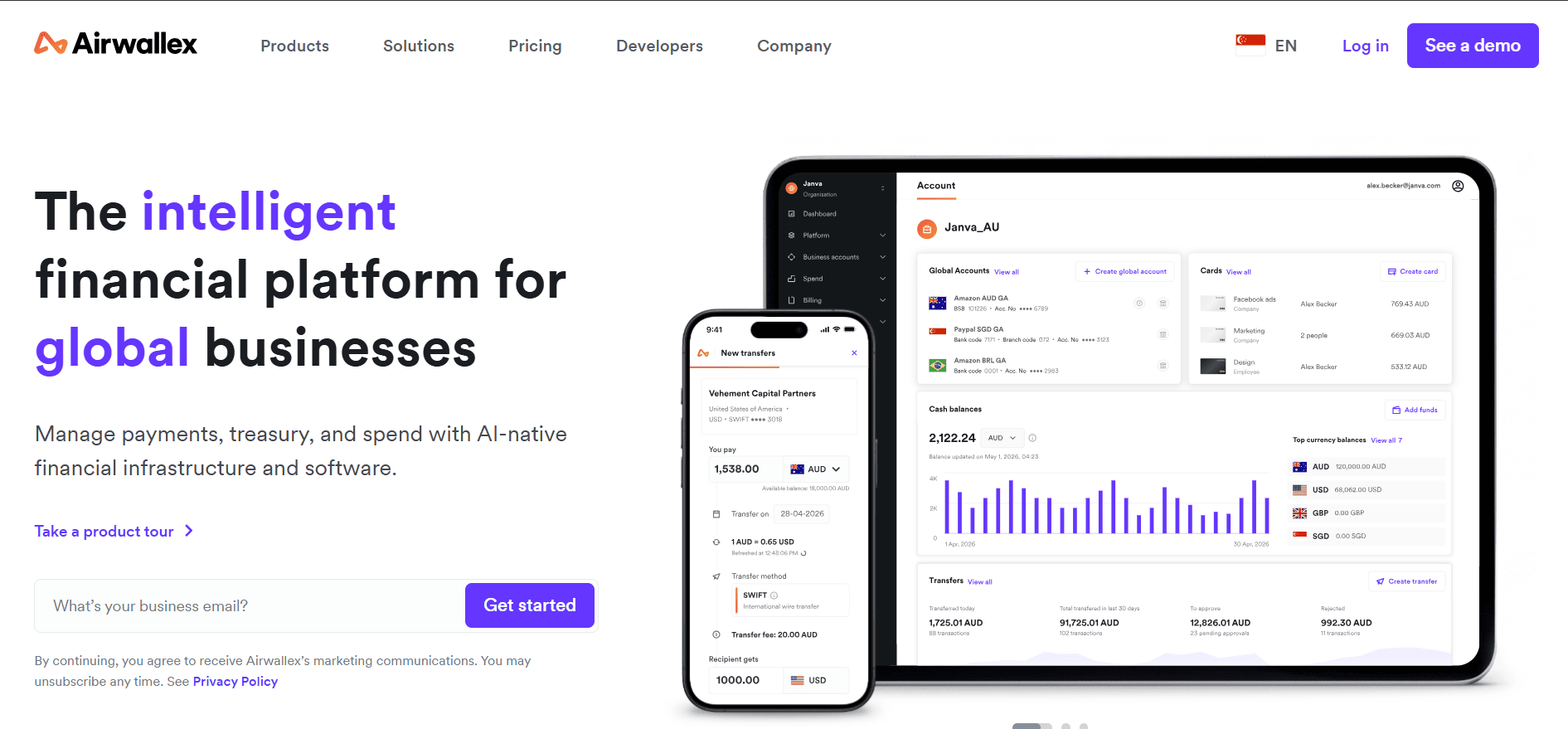
A well-informed website helps increase your business credibility (Source: Airwallex)
Why does it improve your approval chances?
A well-informed website helps banks:
- Understand what your business does;
- Verify your products and services;
- Identify your target customers and markets;
- Assess whether your expected transaction profile matches your business model;
- Conduct independent due diligence more efficiently.
The more information you provide, the easier it becomes for banks to complete their KYC and AML assessments.
What your website should include?
You don't need an elaborate corporate website, but it should clearly explain your business and include:
- Company overview and business activities;
- Products or services offered;
- Contact information and business address;
- Management team or company background of every key persons;
- Customer testimonials or case studies (if available);
- Terms of service and privacy policy;
- Business registration or licensing information where appropriate.
If your business operates internationally, consider publishing your website in English in addition to your local language.
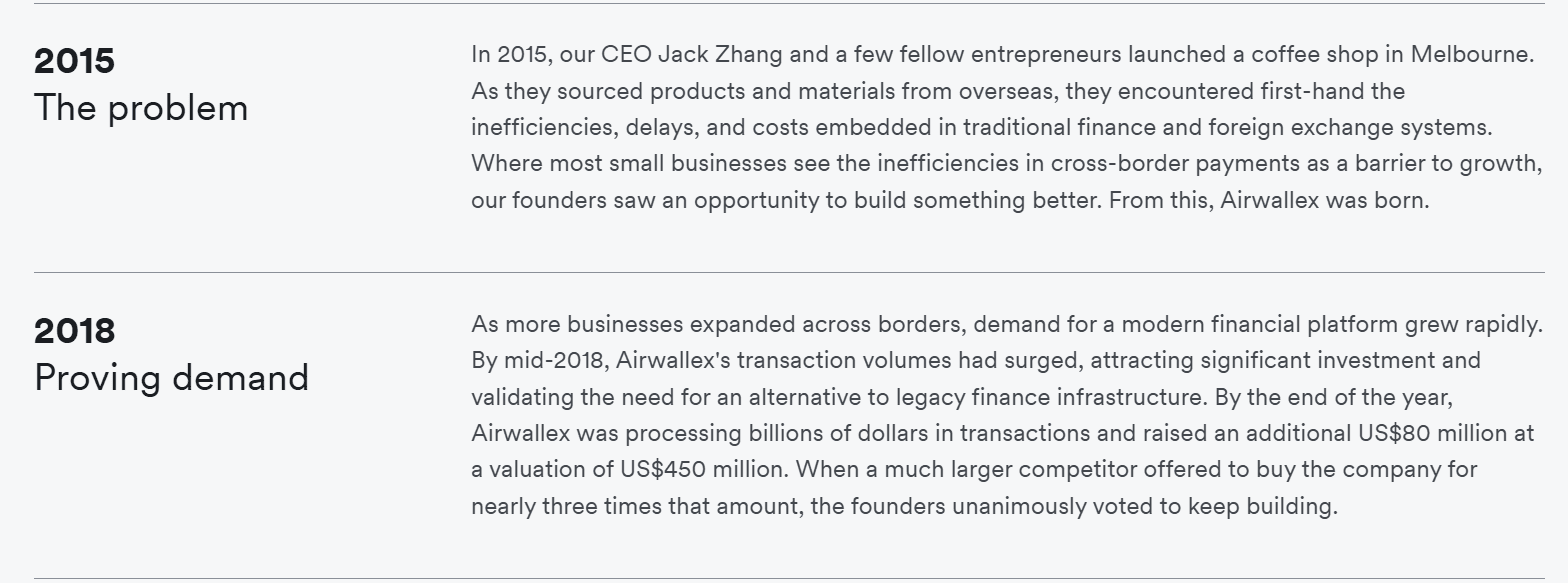
The Who We Are section on Airwallex website
Expert tip
Your website should support, not contradict the information provided in your bank account application. Inconsistent descriptions are a common reason banks request additional clarification.
4.2. Strategy 2: Obtain licenses and operate from a reputable jurisdiction
Banks place greater confidence in businesses that operate under a well-regulated legal framework.
If your business belongs to a regulated industry, such as payment services, fund management, cryptocurrency, money services, or financial advisory, holding the appropriate license is often essential.
Even for businesses outside regulated sectors, incorporating or obtaining regulatory approval in a reputable financial center can significantly improve credibility.
Why does it improve your approval chances?
Banks view licensing as evidence that:
- Your business has undergone regulatory scrutiny.
- You comply with industry-specific regulations.
- You maintain ongoing compliance and reporting obligations.
- Your business is subject to supervision by recognized authorities.
Jurisdictions such as Singapore, Hong Kong, the United Kingdom, and the United States are generally regarded as having strong regulatory frameworks, which can provide additional comfort during the onboarding process.
How to strengthen your position
You should consider
- Obtaining all required business or industry licenses before applying.
- Preparing copies of licenses and regulatory approvals.
- Explaining how your business complies with applicable regulations.
- Providing details of your internal AML, compliance, or risk management procedures if relevant.
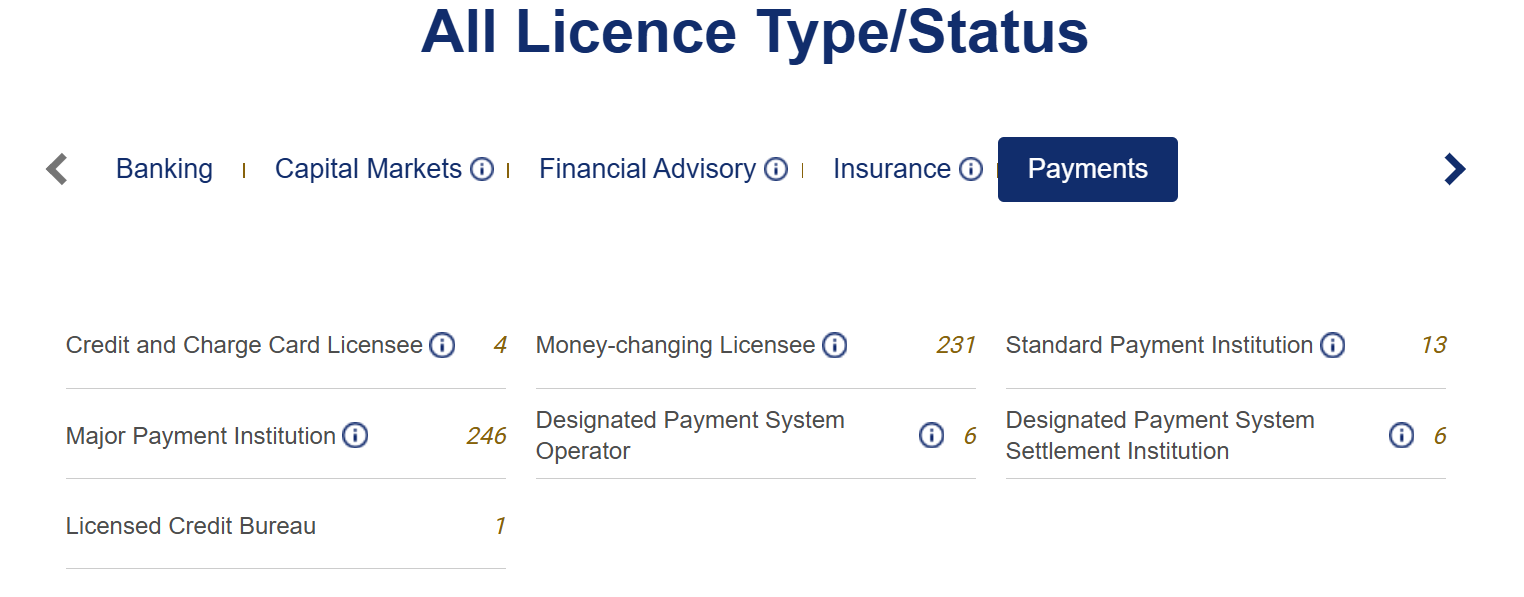
All license types of financial institutions in Singapore
5. How can we help you open a bank account with high success?
Opening a business bank account is no longer just an administrative step, it is a comprehensive due diligence process.
The more transparent your business is, the easier it is for banks to understand your operations, assess your risk profile, and approve your application.
By preparing the right documentation, building a credible online presence, and demonstrating legitimate commercial activities, you can significantly improve your chances of a successful application while reducing unnecessary delays.
If you're unsure where to start or want to maximize your approval chances, our experts are here to help.
With over 10 years of experience advising entrepreneurs, SMEs, and multinational companies, Global Link Asia Consulting has supported thousands of clients in opening business bank accounts across leading financial centers, including Singapore, Hong Kong, the United States, the United Kingdom, and other international jurisdictions. We can help you:
- Recommend the right bank and the right bank account for your needs;
- Support you in opening a reliable, trusted digital bank account or traditional bank account;
- Prepare necessary documents for account opening;
- Schedule an appointment with a Singapore bank representative;
- Monitor and assist in opening corporate bank accounts (physical and digital).
6. FAQs about high-risk industries that banks heavily check
For example, businesses in sectors such as digital services, subscription-based businesses, travel, online education, gaming, and CBD or other regulated markets often face greater scrutiny from banks and payment processors.
These industries typically have characteristics such as higher chargeback rates, cross-border transactions, evolving regulations, or increased exposure to fraud and financial crime.
Before submitting your application, make sure you can answer "Yes" to most of the following:
- My business has a professional website that clearly explains what we do.
- My company description is consistent across all documents and online platforms.
- I can clearly explain my business model and expected transaction flows.
- I have customer contracts, invoices, purchase orders, or other proof of commercial activity.
- My business holds all required licenses and regulatory approvals (if applicable).
- I can identify all Ultimate Beneficial Owners (UBOs) and provide supporting documents.
- I can explain the source of funds and, if requested, the source of wealth.
- My expected transaction volume, currencies, and customer markets are well documented.
- I use a professional business email address and have verifiable contact information.
- I have selected a bank whose services and risk appetite align with my business and industry.
Yes. Digital banks and fintech providers often have a higher risk appetite than traditional banks, making them a viable alternative for some high-risk businesses.
However, they still conduct AML and KYC checks. If you cannot prove your business activities, ownership, or source of funds, your application may still be rejected.
Keep in mind that digital accounts may also have limited features, such as supporting payments and transfers but not offering services like trade finance, lending, or cash deposits.
With over a decade of experience serving as a trusted partner to more than 750 business owners seeking professional development and breakthroughs in the international market, we are an expert strategic corporate service provider helping you incorporate and operate successfully in 10 different countries
Our areas of expertise include:
- Strategic Consulting and Company formation in over 10 different countries worldwide such as Singapore, Hong Kong, the U.S., Australia, Thailand, Malaysia, and offshore destinations like BVI, Belize, Seychelles, and more.
- Account opening for personal and corporate bank accounts, as well as setting up PayPal and Stripe gateqays in countries like Singapore, Hong Kong, and the U.S..
- Tax Consulting and Preparation for SFRS IFRS financial reports, corporate income tax returns, VAT/GST (Value Added Tax/Goods and Services Tax), and more.
- Opreation support:
- Registered adress;
- Foreign consular legalization;
- Trademark and patent protection registration in Singapore and the US;
- Employment Pass application in Singapore and Hong Kong;
- Website design, international SIM number provision;
- DUNS registration.
With over 10 years of experience and a team of experts with 5 to 25 years of experience (international standard certifications) as well as direct partnerships with institutions such as OCBC, UOB, DBS, PayPal, and Stripe, we are proud to offer professional, legal, transparent, sustainable services with no hidden costs.


Global Link Asia Consulting Pte. Ltd. is pleased to announce the publication of the above insightful and informative article on our official website, Global Link Asia Consulting on 31st July 2026. The copyright for this article is exclusively held by Global Link Asia Consulting Pte. Ltd. Any unauthorized reproduction or distribution of this content without our express written permission is strictly prohibited. We value the protection of our intellectual property and appreciate your cooperation in adhering to these guidelines. Thank you for your continued support of Global Link Asia Consulting Pte. Ltd.
The content in this article is provided by Global Link Asia Consulting for general informational purposes only. It is intended as a helpful reference and should not be considered legal, tax, accounting, banking, or other professional advice. Because laws and regulations can change, and every situation is different, we recommend that individuals and businesses seek independent professional advice before making any important decisions. Global Link Asia Consulting is not responsible for any loss or damage that may result from relying on the information in this article without obtaining appropriate professional advice.


 470 North Bridge Road, #05-12, Bugis Cube, Singapore (188735).
 Unit 308, 3/F, Chevalier House, 45-51 Chatham Road South, Tsim Sha Tsui, Hong Kong.
 90/14-17 Sathorn Thani Building 1, 8th Floor, North Sathorn Road, Silom, Bangrak, Bangkok 10500.
 12th, Felix Alley Building, 151/1-2 Nguyen Van Troi, Phu Nhuan District, Ho Chi Minh City, Vietnam.