+65 83551210
When most founders think about a Southeast Asian base for their trading business (Import/export business) Singapore comes up first.
Lower starting capital. Cleaner ownership rules. A global banking reputation.
But Thailand is catching up, and for a specific type of import/export business, it may actually be the smarter move. It sits at the geographic center of the Greater Mekong region, connecting directly to China, Vietnam, Cambodia, Laos, Myanmar, Malaysia, and Singapore. It's building out digital infrastructure fast.
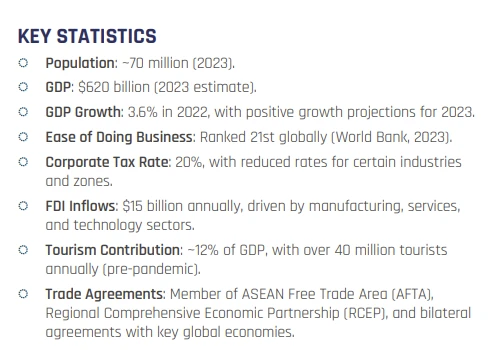
Key statistics that trading companies look for when determing if Thailand is the right location
And since Global Link Asia Consullting opened our Bangkok office, we've seen a steady rise in founders asking the same question: "Can I actually open a trading company in Thailand as a foreigner?"
The short answer: yes. But the path you choose — and how you structure ownership from day one — will determine how much control you have, what it costs, and whether you're legally protected years down the line.
In this guide, you'll learn the four legal structures available to foreign founders, what operational permits you need beyond company registration, and what the 2025 regulatory picture looks like, including Thailand's new fully digital DBD Biz Regist system.
1. Can I actually open a trading company in Thailand as a foreigner?
Yes, but with restrictions. And understanding exactly what those restrictions are is the most important thing you'll do before filing a single document.
Thailand's Foreign Business Act (FBA), enacted in 1999, is the primary law governing foreign investment in the country. It defines a "foreign" company as any entity where 50% or more of shares are held by non-Thai nationals.
The FBA divides restricted activities into three lists:
- List 1 — Fully prohibited for foreigners. Includes rice farming, land trading, media, and forestry. No license or workaround applies.
- List 2 — Requires Cabinet approval for foreign-majority ownership. Covers sectors tied to national security.
- List 3 — Requires a Foreign Business License (FBL) for majority-foreign companies. This is where domestic trading sits.
Here's the critical distinction for trading businesses: domestic wholesale and retail trade falls under List 3, meaning a majority-foreign company generally can't do it without an FBL.
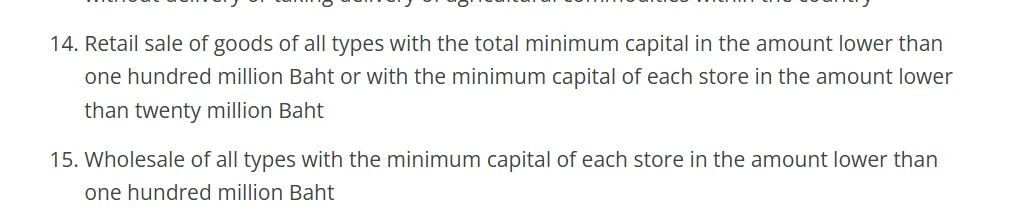
List Three: Businesses in respect of which Thai nationals are not ready to compete with foreigners
What if you want to open an export-oriented trading company in Thailand?
An export-oriented trading company in Thailand is a business established primarily to facilitate the sale of goods from one country to customers in other countries. It serves as a hub for managing international contracts, customs procedures, cross-border transactions, and other legal and compliance requirements related to global trade.
Export-oriented trading is not restricted at all. A 100% foreign-owned company can export freely without an FBL, a Thai partner, or BOI approval.
If your business model is primarily about selling goods out of Thailand, not reselling domestically, this changes your entire setup strategy.
2. The 3 legal structures for foreign trading companies in Thailand
In this section, we cover an essential aspect you should pay attention to: Legal structures when forming a trading company in Thailand
Here are the 3 legal pathways that matter.
2.1. Option 1: Thai-Majority Limited Company (49% Foreign Ownership)
This is the most common structure for foreign founders entering Thailand.
You hold up to 49% of the shares. Thai nationals hold the remaining 51%+. Because the company is Thai-majority, it's classified as a Thai entity under the FBA , and can operate in sectors that would otherwise be restricted.
Since 2023, only 2 shareholders are required to form a Thai limited company, down from the previous 3. So in practice: you as the foreign founder (49%), and one Thai partner (51%).
What this lets you do: Access List 3 restricted sectors, including domestic trading and distribution, without an FBL.
The catch: You relinquish majority ownership. This is legally and commercially significant. You need a Thai partner who is genuinely invested in the business — not just a figurehead.
Using a Thai "nominee", someone who holds shares on your behalf with no real commercial involvement, is illegal. Penalties for both parties run from THB 100,000 to 1 million baht and up to 3 years in prison. The DBD introduced new anti-fraud screening at the point of registration in January 2025 specifically to flag these arrangements.
Best for: Founders who have or can build a genuine Thai partnership, and who want to operate in domestic trade without complex licenses.
A note from our experts
Before finalizing a Thai-majority structure, confirm that your Thai shareholder can demonstrate actual capital investment, bank statements showing they funded their share. Authorities may request this to rule out nominee arrangements.
Thomas_ Legal consutlant
The Thai-majority structure isn't just for small operators, it's been used to bring globally recognized foreign brands into Thailand's retail market.
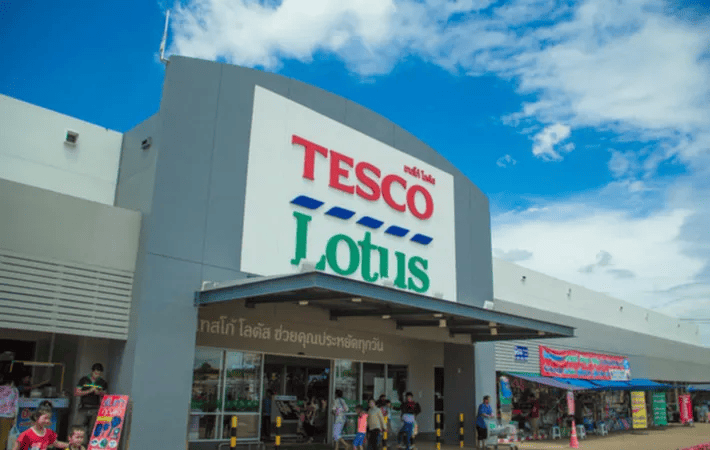
When Tesco entered Thailand in the 1990s through a joint venture with CP Group (Charoen Pokphand), it operated under majority-Thai ownership conditions for years before its footprint grew to nearly 2,000 stores. Tesco eventually exited in 2020 when CP Group reacquired the business, now rebranded as Lotus's, for approximately USD 10.6 billion.
The structure worked for Tesco operationally, but the key was a genuine strategic partner with deep Thai retail infrastructure, not a nominal shareholder.
2.2. Option 2: BOI-Promoted Company (Up to 100% Foreign Ownership)
The Thailand Board of Investment (BOI) is a government agency that promotes foreign investment in priority sectors. If your business qualifies for BOI promotion, you can own up to 100% of a Thai company, even in sectors that would otherwise require a Thai majority.
BOI approval grants a Foreign Business Certificate (FBC), which overrides the FBA's 49% cap for your approved activities.
Benefits beyond ownership:
- Corporate income tax exemption of 3–13 years (depending on the sector);
- Simplified work permit and visa processing for foreign staff;
- Land ownership rights for the promoted project;
- Import duty exemptions on machinery and materials.
Which trading activities qualify?
Based on our experiences, BOI promotion is commonly granted for export-focused trading operations, international business centers, regional headquarters, and high-value supply chain management.
Standard domestic retail or wholesale operations generally don't qualify, but if your trading company is export-oriented or part of a broader regional distribution strategy, it's worth a serious look.
Best for: Founders doing high-value or export-oriented trade, companies planning to hire multiple foreign staff, and any situation where full ownership matters more than speed.
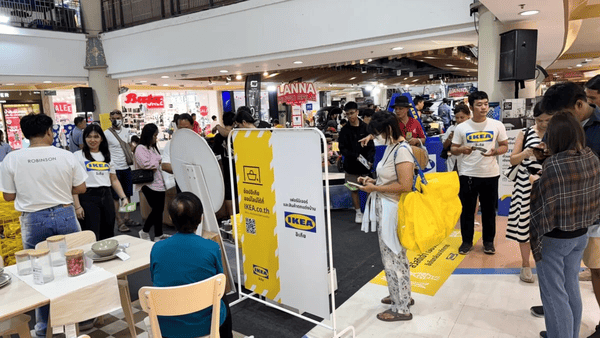
IKEA Thailand, Source: Ikano group
IKEA Thailand is operated by Ikano Retail, one of 12 global IKEA franchisees, owned by the Kamprad family (the founding family of IKEA) and headquartered in Luxembourg. Ikano Retail holds the IKEA franchise rights for Thailand, Malaysia, Singapore, Mexico, and the Philippines.
In Thailand, it operates four IKEA stores (Bangna, Bang Yai, Phuket, and Sukhumvit) plus the Megabangna shopping centre in East Bangkok.
Ikano Retail's Thailand operations are structured as a large-capital foreign retail entity — in a category that the FBA explicitly exempts from the 49% foreign ownership cap when capitalized at THB 100 million or more (FBA List 3, Item 14).
This is the same capital-threshold route described below under the FBL section. It's a lesser-known but fully legal route that large foreign retailers with significant capital can use to achieve 100% foreign ownership in domestic retail, without BOI or an FBL application.
In FY2024, Ikano Retail's Thailand operations generated EUR 286 million in turnover. Source: IKEA Thailand Newsroom.
The BOI route is more relevant for mid-size operations, regional headquarters, or export-oriented trading platforms that don't have THB 100M+ to deploy upfront but qualify for a promoted industry category.
2.3. Option 3: U.S. Treaty of Amity (Americans Only)
If you're a U.S. citizen or operating through a U.S.-incorporated entity, the 1966 U.S.–Thailand Treaty of Amity grants you a significant advantage: 100% ownership in most business categories, with no FBL or BOI required.
American nationals and companies can operate in Thailand on the same basis as Thai companies under the treaty. You'll need certification from the U.S. Embassy in Bangkok (processing takes a few weeks), and the company must have at least 50% U.S. ownership with a majority of U.S. citizen directors.
Excluded activities even under Amity: Land trading, media, transportation, natural resource exploitation, and domestic trade in indigenous agricultural products.
Best for: U.S. nationals or U.S. entities expanding into Thailand who want full ownership without the BOI process.
3. What do you need to know about import/export permits?
Registering the company is not the same as being authorized to trade.
Depending on what you're importing or exporting, you may need permits from specific Thai government agencies in addition to those required by the DBD.
This is one of the areas that foreign founders most often overlook when operating trading companies, as certain products must be licensed before they can be legally imported or exported.
| Product Category | Governing Body | License / Permit Required |
| Vehicles, machinery, textiles, clothing | Department of Foreign Trade | Import/Export License |
| Pharmaceuticals, supplements, food products | Thai Food and Drug Administration (FDA) | Product-specific import permits |
| Gold, precious metals | Ministry of Finance | Import approval |
| Agricultural products (rice, rubber, sugar) | Ministry of Commerce | Quota or license depending on volume |
| General manufactured goods | Thai Customs Department | Importer/Exporter registration number |
A few things worth knowing:
- The FDA licensing timeline can be long. If you're importing health products, supplements, or any food item, build 60–120 days into your launch plan for FDA approval. This is separate from company registration entirely.
- Agricultural trade has specific FBA implications. The FBA previously listed domestic trade in native agricultural products under List 3. A May 2026 Royal Decree removed agricultural futures trading (where physical delivery occurs in designated warehouses) from the restricted list, so the landscape here is actively changing. It is important to review your specific situation carefully. Check whether your products are subject to any import or export restrictions
- Customs registration is the base layer. Every trading company importing or exporting goods needs an importer/exporter registration number from Thai Customs before the first shipment clears. Get this early.
4. How to register your trading company in Thailand with our experts
Once you've chosen your structure, registration itself is faster than most people expect.
As of July 1, 2025, Thailand's Department of Business Development (DBD) retired its legacy e-Registration system.
All company registrations for private limited companies and partnerships now go through DBD Biz Regist, a fully digital platform.
If you'd rather not navigate this alone, GLAC's experts team has guided foreign founders through this exact process for over 10 years,from structure selection to DBD filing to bank account opening. Talk to a GLAC expert today for more guidance for your case
The 8 steps our experts walk you through
- Reserve your company name via DBD Biz Regist: check availability and confirm it follows DBD naming rules (must include "Company Limited")
- Draft the Memorandum of Association (MOA): include registered capital, shareholder names, company objectives, and the province of registration
- Hold the statutory meeting: elect the board of directors, define the share structure, and formally approve the MOA
- Register the company at DBD: submit all documents through DBD Biz Regist; approval typically takes 1–7 business days
- Register with the Revenue Department: obtain your tax ID card and corporate registration number
- Register for VAT: mandatory if projected annual revenue exceeds THB 1.8 million
- Register with Thai Customs: required before any import or export activity begins; this is a step many founders miss
- Open a corporate bank account: most banks require at least one director to be physically present in Thailand; allow approximately 9 days for this process
5. How can we help you register your company in Thailand
Thailand isn't the easiest place to open a trading company as a foreigner. The ownership rules are stricter than Singapore, Hong Kong anh other countries.
But the opportunity is real. At the center of ASEAN supply chains, with improving digital infrastructure, a growing consumer market, and a government actively modernizing its foreign investment framework, Thailand is worth the setup effort if your business model fits.
The founders who succeed here are the ones who choose the right structure before they start, and prepare accordingly.
You don't need to figure this out alone.
Start small:
- Map your product categories against the FBA's three lists to confirm which restrictions apply to your specific trading model
- Decide early whether your business is export-oriented (simpler, full foreign ownership) or domestic-facing (requires structure work)
- Get an expert involved before you name the company, structure decisions made at incorporation are difficult to undo.
If you need support from our experts, we can help you. We've spent 10 years helping hundreds of founders, international teams from the US, Europe, Australia, and across Asia, set up and operate trading companies in Thailand. Wen can handle:
- Assess your revenue model, team structure, and goals to recommend the right legal structure, ownership approach
- Pre-screen your name options against the DBD database and submit on your behalf
- Provide or recommend a legitimate, BOI-eligible address so you're compliant from day one
- Handle all DBD filings, statutory meeting documentation, and director ID submissions from start to finish
- Prepare your full bank application package, leverage relationships with KBank, Bangkok Bank, and SCB, and accompany you from start to finish,
- Provide ongoing monthly/yearly tax accounting services, and annual audits so you stay compliant without thinking about it.
6. FAQs about Tech & SaaS Company setup in Thailand
Yes, through BOI promotion for qualifying tech and software activities, or via a Foreign Business License for certain sectors. Without these, foreigners are generally capped at 49% ownership under the Foreign Business Act.
E-commerce involving domestic sales generally falls under restricted activities for majority-foreign companies under the FBA. Foreigners wishing to operate a domestic-facing e-commerce business typically need an FBL or must use a Thai-majority structure.
Export-focused e-commerce, selling internationally from Thailand is less restricted. If e-commerce is part of your model, confirm the classification with a Thai legal advisor before structuring.
Our experts can help you check whether or not your business model is subject to Thai restrictions.
With over a decade of experience serving as a trusted partner to more than 750 business owners seeking professional development and breakthroughs in the international market, we are an expert strategic corporate service provider helping you incorporate and operate successfully in 10 different countries
Our areas of expertise include:
- Strategic Consulting and Company formation in over 10 different countries worldwide such as Singapore, Hong Kong, the U.S., Australia, Thailand, Malaysia, and offshore destinations like BVI, Belize, Seychelles, and more.
- Account opening for personal and corporate bank accounts, as well as setting up PayPal and Stripe gateqays in countries like Singapore, Hong Kong, and the U.S..
- Tax Consulting and Preparation for SFRS IFRS financial reports, corporate income tax returns, VAT/GST (Value Added Tax/Goods and Services Tax), and more.
- Opreation support:
- Registered adress;
- Foreign consular legalization;
- Trademark and patent protection registration in Singapore and the US;
- Employment Pass application in Singapore and Hong Kong;
- Website design, international SIM number provision;
- DUNS registration.
With over 10 years of experience and a team of experts with 5 to 25 years of experience (international standard certifications) as well as direct partnerships with institutions such as OCBC, UOB, DBS, PayPal, and Stripe, we are proud to offer professional, legal, transparent, sustainable services with no hidden costs.


Global Link Asia Consulting Pte. Ltd. is pleased to announce the publication of the above insightful and informative article on our official website, Global Link Asia Consulting on 22nd April 2026. The copyright for this article is exclusively held by Global Link Asia Consulting Pte. Ltd. Any unauthorized reproduction or distribution of this content without our express written permission is strictly prohibited. We value the protection of our intellectual property and appreciate your cooperation in adhering to these guidelines. Thank you for your continued support of Global Link Asia Consulting Pte. Ltd.
The content in this article is provided by Global Link Asia Consulting for general informational purposes only. It is intended as a helpful reference and should not be considered legal, tax, accounting, banking, or other professional advice. Because laws and regulations can change, and every situation is different, we recommend that individuals and businesses seek independent professional advice before making any important decisions. Global Link Asia Consulting is not responsible for any loss or damage that may result from relying on the information in this article without obtaining appropriate professional advice.
 470 North Bridge Road, #05-12, Bugis Cube, Singapore (188735).
 Unit 308, 3/F, Chevalier House, 45-51 Chatham Road South, Tsim Sha Tsui, Hong Kong.
 90/14-17 Sathorn Thani Building 1, 8th Floor, North Sathorn Road, Silom, Bangrak, Bangkok 10500.
 12th, Felix Alley Building, 151/1-2 Nguyen Van Troi, Phu Nhuan District, Ho Chi Minh City, Vietnam.